 NZ to Utopia
AI as Saviour
The intelligence explosion brings an uncomfortable paradox: the same AI revolution that displaces jobs and disrupts economic systems also creates an unprecedented resource — cheap, abundant intelligence. The question isn't whether disruption is coming. It's whether we can turn the very thing causing the problem into our best tool for recovery.
This section argues that we can. But only if we own the compute.
Sovereign Compute — The Prerequisite
Every case study below assumes one thing: that New Zealand has its own AI infrastructure. Not rented from a hyperscaler. Not dependent on the goodwill of a handful of corporations. Ours.
The AI causing economic disruption is controlled by a small number of companies running the cheapest, most powerful frontier models. In a genuine crisis, a nation can't depend on corporate API access staying available, affordable, or aligned with its interests.
The solution is a sovereign compute stack. Yes, it's more expensive per token than commercial offerings. Yes, it runs smaller, less powerful models. But it's infrastructure we control — and in a crisis, control is everything.
The vision: every New Zealand household gets access to a personal AI agent through a public interface. That agent becomes their proxy into whatever crisis-response systems are running — trade matching, supply chain coordination, democratic deliberation.
What would this actually cost?
This calculator lets you explore the real numbers. Adjust the model size, usage level, and assumptions to see what sovereign AI infrastructure would cost as a national investment.
What Would Sovereign AI Cost NZ?
A 70B model for every NZ family at comfortable usage
Comparison (annual spend)
The numbers are significant but not outlandish. At the default settings, the annual operating cost is comparable to public broadcasting — a fraction of what we spend on roads. This isn't science fiction infrastructure. It's a policy choice.
Crisis Case Studies
So what does sovereign AI actually do in a crisis? The case studies below focus deliberately on coordination and decision problems — areas where abundant intelligence helps without the emotional contradiction of "AI took your job, now AI does your job."
Each one follows the same structure: what breaks, why humans alone struggle at scale, how AI intelligence fills the gap, and what recovery looks like.
Oil Supply Disruption
The US-Iran conflict has disrupted oil shipping through the Strait of Hormuz. New Zealand is particularly exposed — geographically remote, import-dependent, with long and fragile supply chains. Oil price spikes cascade into fuel, food distribution, manufacturing, and consumer goods.
What could we do about it right now, with the AI models that exist today, a small team, and a modest budget?
Supply Chain Rerouting

The team
Eight to twelve people — trade analysts, logistics experts, a couple of developers, and a domain lead. They sit in a war room with API access to a frontier language model.
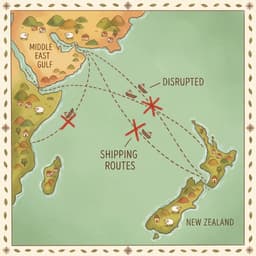
Step 1 — Map the exposure
The team feeds NZ Customs import data — every shipment entering New Zealand with its origin country, product code, and volume — into the model as structured data. They ask it to identify every product category where more than 20% of imports originate from Gulf states or transit the Strait of Hormuz, ranked by volume, value, and how easily each product can be substituted.
The model reads hundreds of thousands of trade records and produces a ranked vulnerability list in minutes. An analyst doing this manually would take weeks with spreadsheets.
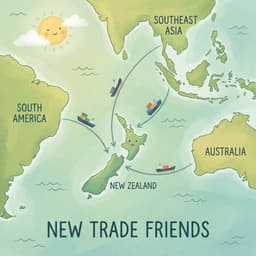
Step 2 — Find alternatives
For each vulnerable product, the model cross-references the UN Comtrade database — global trade flows showing which countries export what, to whom, at what volume. It filters by existing trade relationships with NZ, port capacity, and shipping time under 30 days. Out comes a shortlist of alternative suppliers with estimated lead times and price premiums.
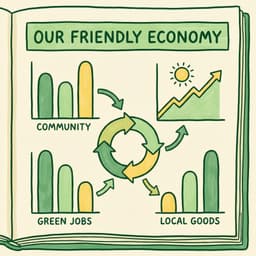
Step 3 — Model the cascading effects
“If Gulf oil supply drops by 40% for six months, what happens to NZ fuel prices, transport costs, food prices, and manufacturing output?” The model runs the logic chain — fuel price increases flow into freight costs, flow into food retail, flow into consumer spending, flow into employment — and produces a scenario brief with confidence ranges.
Output: a 50-page crisis brief in 3 days instead of 3 months. Ministers get a clear picture of 47 vulnerable product categories, alternative sources for 39 of them, and economic impact under three scenarios.
Energy Rationing That's Actually Fair
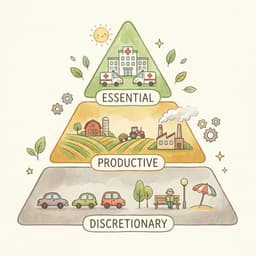
The problem with blanket rationing
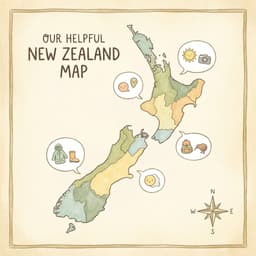
Naive rationing — everyone gets the same cut — causes disproportionate harm. Rural communities, hospitals, and food logistics need more fuel than suburban commuters. A small team of energy analysts feeds EECA consumption data and Ministry of Transport travel patterns into the model, which builds a consumption map of the entire country: essential services, productive economy, discretionary use.
Tailored guidance, not one-size-fits-all
The model designs three rationing tiers (20%, 35%, 50% reduction), protecting essential services first. For each region, it generates specific practical guidance: your fuel allocation, your public transport alternatives, carpooling coordination, estimated duration. A regionally-adapted rationing framework built in days instead of weeks of committee deliberation.
Decision Support for Cabinet

Six options in four days, not six weeks
Cabinet needs to decide: release the strategic fuel reserve now or hold it? Subsidise freight operators? Invoke emergency import agreements with Australia? Each decision has cascading consequences. Treasury economists feed the model their fiscal parameters, historical crisis data, and the current situation.
The model produces six fully-modelled scenarios combining fuel reserve timing, freight subsidies, and Australian imports — each with GDP impact, inflation projections, unemployment effects, and fiscal cost. Ministers get plain-language briefs: “Option A: release reserve now plus subsidise freight. GDP impact -1.2%, inflation +3 points, fiscal cost $800M. Risk: reserve depleted if disruption exceeds 9 months.”
Treasury would normally need 6–8 weeks for this depth of analysis. The AI compresses it to 4 days.
The Intelligence Layer
Everything above is analysis — teams in war rooms crunching data. But crises require reaching thousands of people on the ground, collecting real-world data, and coordinating action. This is where the fact that LLMs speak natural language becomes a force multiplier.

AI voice agents contact businesses, farms, and freight operators at scale. Natural conversation, not rigid scripts — “How much diesel do you have? What routes do you cover?” One human agent handles 40 calls a day. The AI system handles thousands simultaneously. In 48 hours, every freight operator and fuel distributor in the country is surveyed.
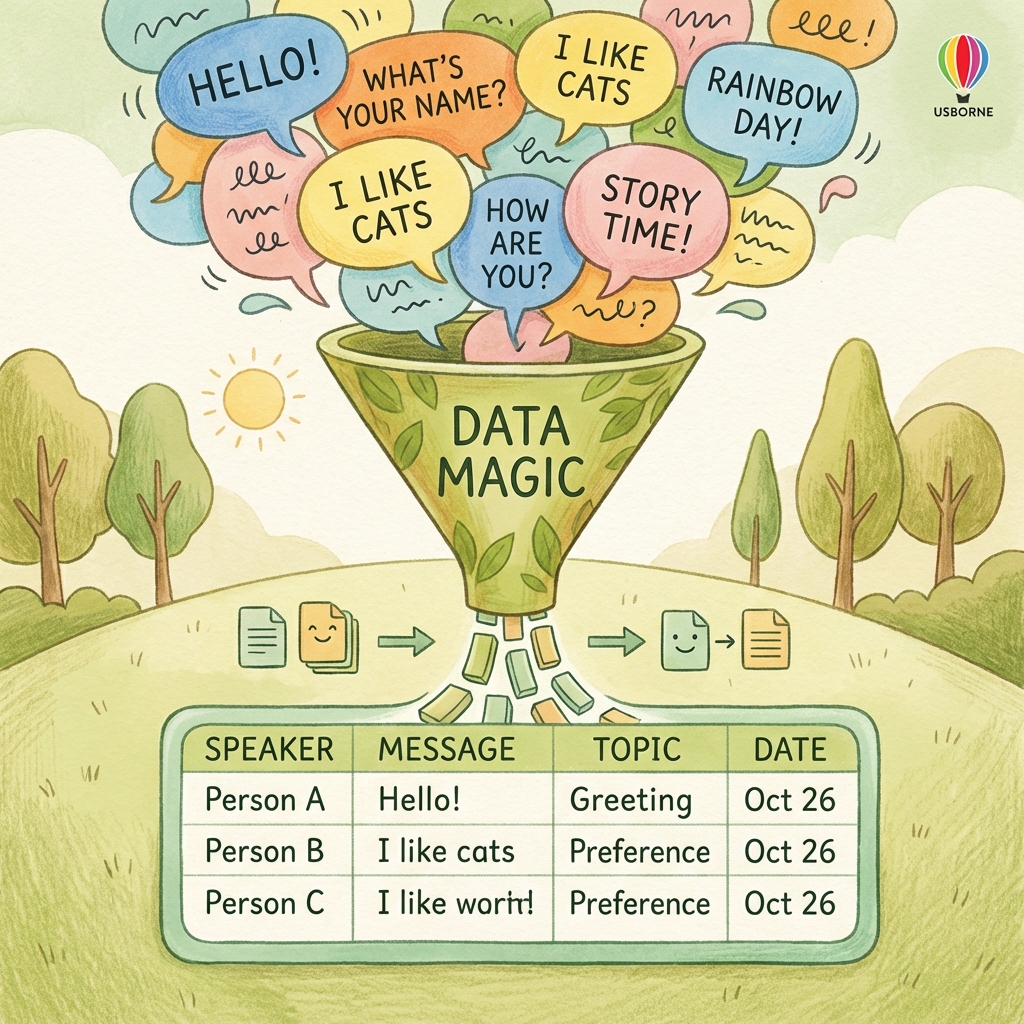
Every conversation is transcribed and parsed. The AI extracts structured data — fuel reserves in litres, route coverage, vehicle counts — into a central database. Thousands of conversations become a real-time national picture within hours.

Once decisions are made, the AI calls people back with directives tailored to their situation: “You told us you have three days of diesel and run the Christchurch–Timaru route. The government is prioritising food logistics on that corridor. Here’s what we need you to do, and why.”
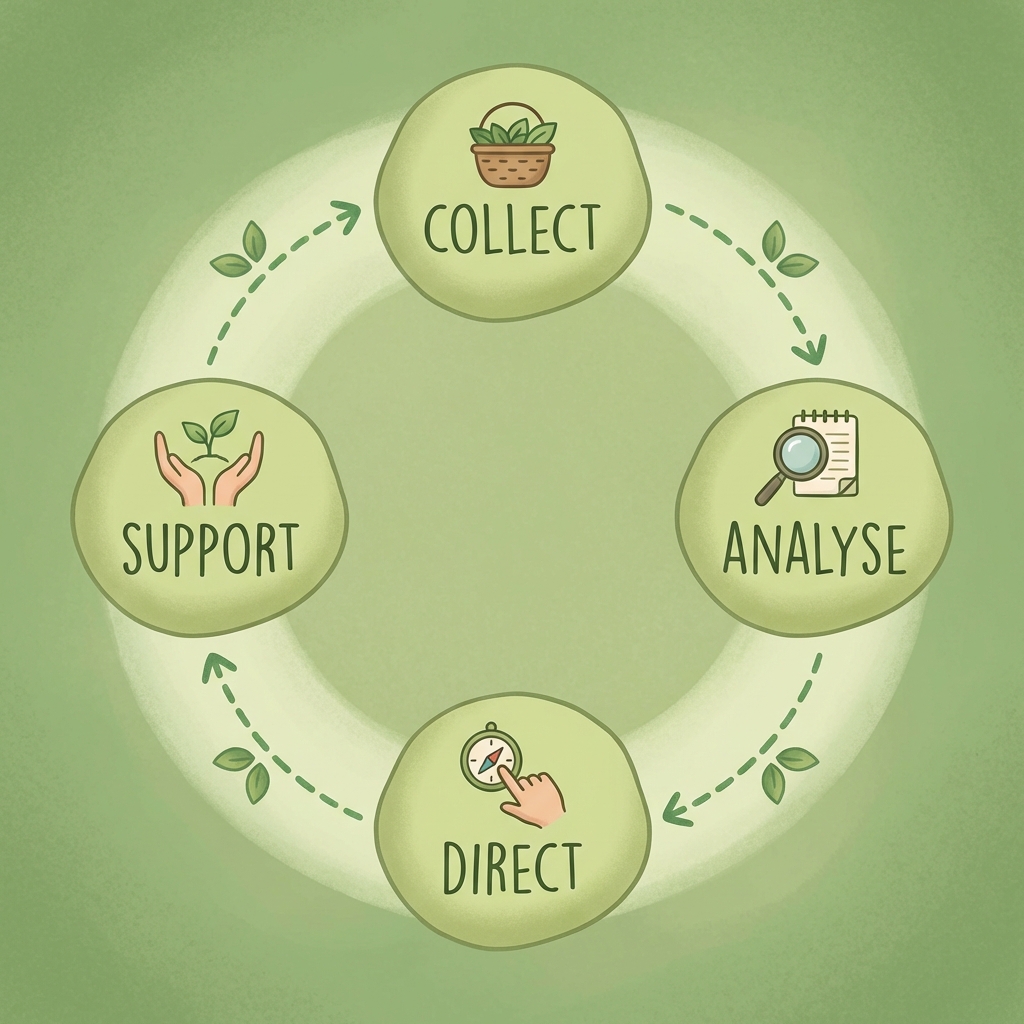
The person can ask questions, push back, and get reasoning explained — in natural language, not a bureaucratic PDF. “Why Timaru over Ashburton?” The AI explains. Human escalation is always available, but the AI handles the majority.
This creates a virtuous feedback loop: analysis identifies what data is needed → AI field agents collect it at scale → data improves the models → better decisions go out → responses come back → models update again.
What This Costs
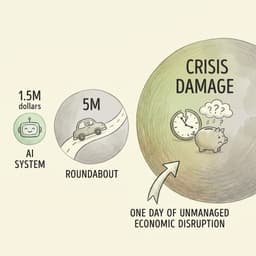
Less than a roundabout
For context: less than a single roundabout. Less than one day of economic damage from an unmanaged oil crisis. The intelligence is essentially free compared to the scale of the problem.
What AI can’t do here
- Physically move oil or goods
- Make political decisions — only model their consequences
- Replace infrastructure (ports, pipelines, refineries)
- Work without local data — NZ-specific supply chain knowledge needs to be built up with real data feeds
The pattern across all five case studies is consistent: AI doesn't replace human decision-making. It makes coordination possible at a scale and speed that humans alone can't achieve. The intelligence is the infrastructure.
The Political Ask: Cross-Party Compute Commitment
This isn't a left-vs-right issue. It's national resilience — closer to defence than to social policy. And the ask is deliberately modest:
Challenge every political party to commit to three things:
- Fund the plan — commission a detailed feasibility study and architecture for NZ sovereign AI infrastructure
- Have it ready — a shelf-ready deployment plan that can be activated if economic disruption accelerates
- Stockpile compute — begin acquiring a modest GPU reserve, like a strategic petroleum reserve but for intelligence
Why this works
A feasibility study plus a small compute stockpile costs tens of millions, not billions. Any party can commit to this without betting the budget. The question is simple enough for voters to ask their MPs directly: "Does your party support funding a sovereign AI contingency plan? Yes or no?"
The compute stockpile analogy
Nations maintain strategic reserves — oil, grain, medical supplies — as insurance against disruption. A compute reserve follows the same logic:
- Start small: 1,000–5,000 GPUs (under $125M)
- Dual use: runs research and public services in peacetime
- Scalable: can be expanded rapidly if crisis conditions emerge
- Signal: demonstrates that New Zealand takes AI sovereignty seriously
The calculator above shows what a full deployment would cost. The stockpile is the down payment — proof of concept and insurance policy rolled into one.
What comes next
This page presents one bold idea: that sovereign AI infrastructure is both affordable and essential for national resilience. The rest of this document explores the broader landscape — which industries are most exposed, how we retrain and support displaced workers, and what governance frameworks keep all of this democratic and accountable.
But it starts here, with a question: if AI is going to reshape our economy whether we're ready or not, shouldn't we at least own the intelligence that helps us navigate the transition?